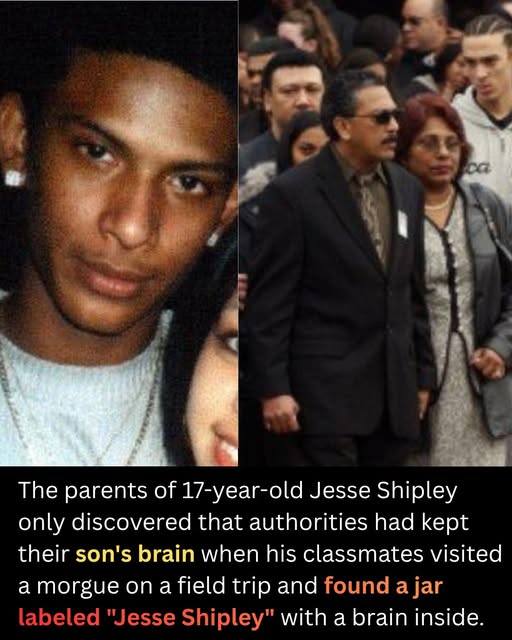
The tragic story of Jesse Shipley highlights a heartbreaking breach of trust and systemic failure. In January 2005, 17-year-old Jesse died in a car crash on Staten Island. His family honored him with a Catholic funeral, finding some solace in the ritual of saying goodbye. However, their grief was shattered two months later when his classmates took a school field trip to a local morgue and made a shocking discovery.
In the autopsy room, they saw a jar labeled “Jesse Shipley – as a result of drunk driving,” containing his brain preserved in formalin. The label also read, “This is what happens when you drink and drive,” even though Jesse was neither drinking nor driving; he was a passenger. The medical examiner, Dr. Stephen de Roux, had removed Jesse’s brain during the autopsy without informing his family and had kept it for months, waiting until he had collected at least six brains before requesting a neuropathologist to process them. The reason? It was an efficiency system, a backlog of human brains, including those of children.
In addition to his brain, portions of Jesse’s liver and testes were retained and later returned to his family in a small casket for separate burial, further complicating their grief. The family’s Catholic priest insisted that Jesse’s burial was incomplete without all his body parts, prompting a second funeral.
The family sued the city, initially winning $1 million, later reduced to approximately $600,000. However, in 2015, New York’s highest court overturned the verdict, ruling that the medical examiner had no legal obligation to notify the family of organ retention or return all body parts. The court concluded that the system protected itself at the expense of Jesse and his loved ones, leaving them with a profound sense of betrayal and loss. Their story exposes a systemic failure to honor the dignity of the deceased and to respect the rights of grieving families.